
The Adirondack chair has a rich history and is a beloved piece of outdoor furniture. Here’s a brief overview of its origins and evolution:
- Creation:
- The Adirondack chair was originally designed in 1903 by Thomas Lee. He was vacationing in Westport, New York, a town in the Adirondack Mountains, and wanted comfortable outdoor seating for his summer home.
- Design:
- Lee’s original design featured eleven pieces of wood, all from a single board, and wide armrests.
- To test his design, Lee had his family try out prototype versions until he settled on the final structure.
- Commercialization:
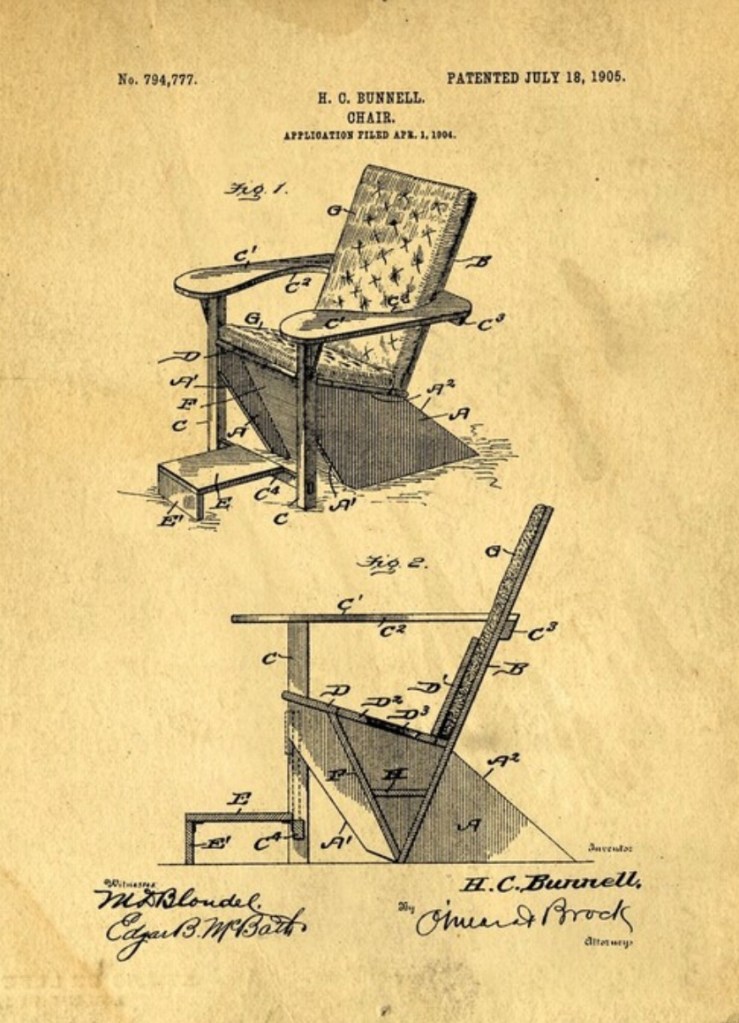
- Lee shared his design with a carpenter friend, Harry Bunnell, who saw commercial potential in the chair.
- In 1905, Bunnell patented the design without Lee’s knowledge and began producing and selling them under the name “Westport Chair.”
- Popularity:
- The chair became popular for its sturdy construction and comfortable design, making it ideal for outdoor use, particularly in areas like gardens and patios.
- Evolution:
- Over time, the Adirondack chair evolved in style. Many adaptations include rounded backs, comfort-enhancing contours, and various material options like plastic, teak, and metal.
- Cultural Impact:
- The Adirondack chair is synonymous with relaxed outdoor living and is a staple in settings ranging from lakesides to backyards.
Through its history, the Adirondack chair has remained a timeless favorite due to its simplicity and comfort, embodying the spirit of leisure in natural settings.

 Cloudspin Woodworks
Comments